Soft-Lit Confessions: The Celebrity Documentary That Promises Everything and Admits Absolutely Nothing
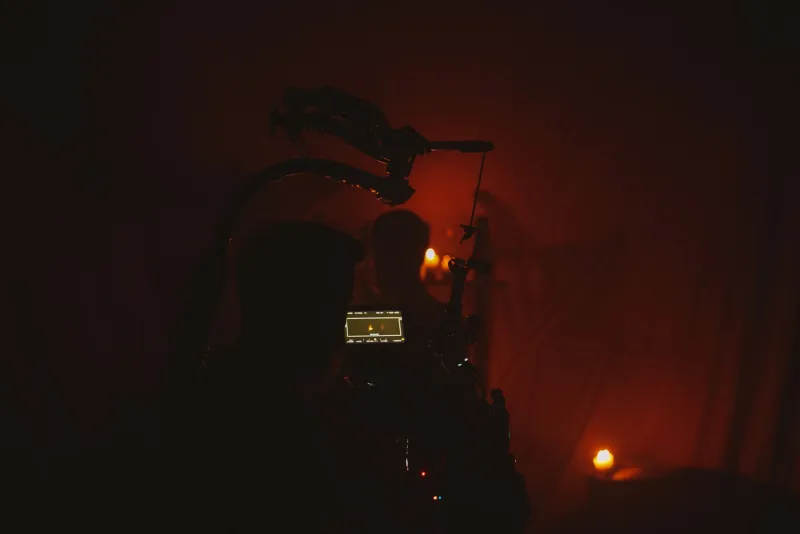
Somewhere in a tastefully appointed room, lit in the warm amber tones of a scented candle commercial, a celebrity is about to tell you the truth. The real truth. The unfiltered, unvarnished, this-time-it's-different truth that their previous interviews, memoirs, and carefully managed Instagram captions somehow couldn't contain. The camera is close. The music underneath the scene is piano-forward and slightly melancholy. The celebrity takes a breath.
And then they tell you something you already knew, framed as a confession, packaged as catharsis, and sold to a streaming platform for a number that would make your eyes water.
This is the celebrity documentary. This is, apparently, what vulnerability looks like when it has a production budget and an executive producer credit.
The Promise and the Pivot
Every celebrity documentary of this particular genre — and it is absolutely a genre at this point, with its own conventions as rigid as the Western or the rom-com — begins with the same implicit contract. The marketing materials promise access. Real access. The kind that previous documentaries, previous interviews, previous everything has never quite delivered. This one will be different. This one, the celebrity has approved.
That last part is where the whole thing quietly collapses.
A documentary subject who controls the footage, approves the edit, and retains final cut authority is not making a documentary. They're making a very long commercial for a more sympathetic version of themselves. The camera is technically present. The camera is technically rolling. But the camera is only ever pointed in directions that have been agreed upon in advance by people whose primary professional obligation is to protect the celebrity's image.
The result is something that looks like transparency and functions like a press release. It has the aesthetic of confession and the substance of a fan site.
The Therapy Session Sequence Is Not What You Think It Is
At some point — usually around the forty-minute mark, when the documentary needs to shift gears from "here's my impressive career" to "here's my relatable pain" — the celebrity appears in what is presented as a therapy session. The therapist is warm. The lighting is warmer. The celebrity says something that sounds vulnerable, something that sounds like it cost them something to say.
Let's think about this for a moment.
If a therapy session is filmed by a professional camera crew, lit by a gaffer, and subsequently reviewed by the celebrity's team before inclusion in a streaming documentary, it is not a therapy session. It is a performance of a therapy session. The therapist in the frame may well be an actual therapist. The emotions may be genuine. But the decision to film it, include it, and release it to millions of people is not a therapeutic decision. It is a strategic one.
The therapy footage exists to establish emotional credibility. It signals to the audience that the celebrity is doing the work, is self-aware, is the kind of person who takes their inner life seriously. It is the documentary equivalent of posting a gym selfie — not evidence of the process, but evidence of wanting you to know about the process.
The Conspicuous Absence
Here is how to watch a celebrity documentary critically: pay attention not to who appears on camera, but to who doesn't.
Every one of these projects, without exception, contains a notable gap. An ex-partner who declined to participate. A former collaborator who isn't mentioned despite being central to a pivotal period. A family member whose absence from the interview list is so loud it has its own acoustic presence. A business partner from the venture that went sideways. A friend from the era the celebrity prefers to describe vaguely as "a really difficult time."
These absences are where the actual story lives. The documentary is built, structurally, around them. The narrative arcs away from anything that might require an outside perspective, a contradicting account, or a memory that doesn't align with the version being presented. Everyone who appears has been selected for their willingness to corroborate, to affirm, to sit across from the celebrity and say some version of "I always knew they'd get through it."
The people who might say something else are simply not there. The edit room handles the rest.
The Strategic Tear
Crying in a celebrity documentary is not what it appears to be. This is not a cynical statement about the authenticity of the emotion — the emotion may be entirely real. It is a statement about timing, which is always, always suspicious.
The tears arrive at moments of narrative convenience. They punctuate the hardest chapter. They appear when the story needs a gear shift. They are held just long enough for the camera to register them and then composed, because composure after vulnerability reads as strength, and strength is part of the image being constructed.
A genuine, unguarded emotional moment in a documentary would be messy. It would be poorly lit. It would probably happen when the camera was pointed somewhere else, because real moments don't wait for the crew to get set up. What appears in these documentaries is grief that has been located, scheduled, and tastefully captured by people who do this for a living.
None of which means the celebrity isn't sad. It means the sadness has been incorporated into the content strategy.
What Would an Actual Revelation Look Like
It might be useful, as a thought experiment, to imagine what a genuinely revelatory celebrity documentary would contain. Not the kind that's been made — the kind that hasn't been made, and won't be, because no celebrity with the resources to fund one would ever allow it to exist.
It would include people who disagreed with the celebrity's account of events and were given equal screen time. It would include footage that made the subject look bad — not strategically bad, not sympathetically bad, but just bad, the way everyone is sometimes just bad. It would include questions that didn't get answered, and it would let the non-answers sit there uncomfortably rather than cutting away to archival footage of a better moment.
It would not have a redemption arc, because real lives don't have redemption arcs on schedule. It would not end with the celebrity in a good place, necessarily, because the camera stopping doesn't mean the story stops.
That documentary doesn't exist. What exists instead is ninety minutes of curated footage, strategic emotional release, and the faint, persistent sense that you've been shown a very detailed map of a place you were never actually taken.
The Most Expensive Press Release in History
The celebrity documentary, in its current form, is a masterpiece of misdirection. It uses the visual and emotional language of genuine journalism — the handheld camera, the long silences, the archival photographs — to deliver something that is functionally indistinguishable from a publicity campaign. It is PR with better cinematography. It is brand management with a piano score.
And it works. It works because the format carries an implied credibility that the celebrity's own social media cannot. A documentary feels like something that required courage to make. It feels like something was risked. The audience arrives primed to receive revelation and is skilled enough at the emotional choreography of these things to find revelation in moments that are, on closer inspection, entirely safe.
The celebrity walks away with a refreshed public image, a streaming deal, and the reputation of someone who bravely told their truth. The audience walks away feeling like they witnessed something real.
The truth, whatever it actually is, remains exactly where it was before the cameras arrived: off-screen, out of frame, and carefully out of reach.