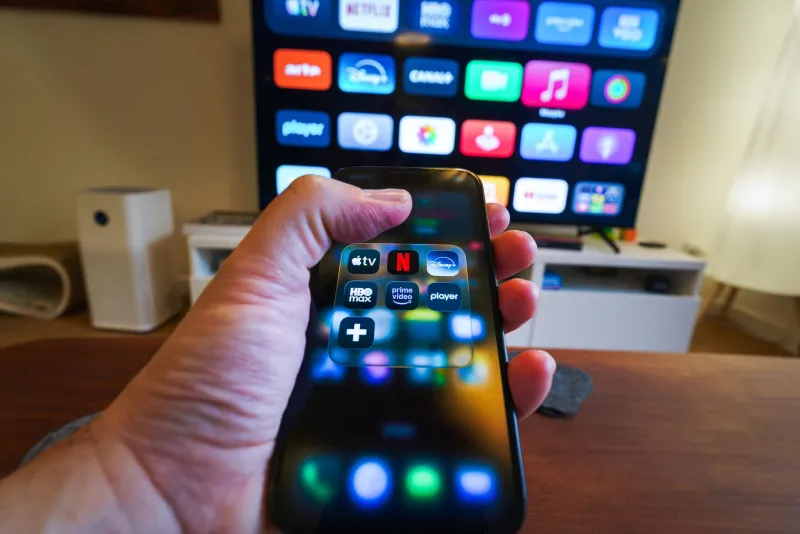
Hundred Million Dollar Ghosts: The Streaming Originals That Blew a Fortune and Haunted Absolutely Nobody
Somewhere in the bowels of a Netflix conference room, there is a slide deck that nobody is allowed to open anymore. It contains the budgets, the marketing spends, and the two-week viewership numbers for a collection of films so expensive and so thoroughly ignored that mentioning them by name is basically a fireable offense. Welcome to the streaming original graveyard, where money goes to die quietly and executives learn absolutely nothing.
We are not here to talk about honest box office bombs. Those at least had the dignity to fail in public, with receipts, in front of God and a Tuesday afternoon multiplex crowd. What we are here to discuss is something far more spiritually disturbing: the big-budget streaming original that arrives with a Super Bowl trailer, a press junket where the cast pretends to be excited, and a marketing blitz that colonizes every podcast ad break you've heard since October — and then vanishes so completely that two weeks later you genuinely cannot remember if you watched it or just dreamed you did.
This is the black hole problem. And it is costing somebody an absolutely unhinged amount of money.
The Anatomy of a $100 Million Nobody
Here is how the cycle works, and it is almost beautiful in its stupidity. A streaming platform, flush with subscriber money and the institutional memory of a golden retriever, decides it needs a "tentpole" original film. Something prestige-adjacent. Something that will make critics use words like "sweeping" and "ambitious." They attach a director with one genuinely good film from eleven years ago, a cast of three recognizable faces who are between interesting projects, and a concept that sounds vaguely like three successful movies stapled together in a pitch meeting.
The budget balloons. The reshoots happen. The marketing department, sensing blood in the water, decides the only solution is to spend more money on ads than a mid-sized country spends on infrastructure. You see the trailer before every YouTube video for six weeks straight. There is a tie-in with a fast food chain. Someone does a profile piece in a magazine calling it "the film that could change everything."
It drops on a Friday. It trends for roughly forty-eight hours. By the following Thursday, it is functionally a myth.
The Leaderboard of Financial Carnage
Let's be specific, because vague accusations are for people who are afraid of getting angry emails.
The Action Spectacle That Forgot to Have a Plot — You know the genre. Enormous set pieces. A charismatic lead who is clearly doing this because someone handed them a bag. CGI that cost more than the GDP of a small island nation and somehow still looked unfinished. These films are engineered to generate clips for social media but have no actual reason to exist as a two-hour experience. They perform fine in the first weekend metrics, get cited in a press release about "record viewing hours," and are never discussed by any human being voluntarily ever again.
The Prestige Drama That Wanted an Oscar and Got a Shrug — This is the one that hurts the most, honestly. Someone genuinely tried. There was craft involved. A respected actor gave what their publicist described as "a career-defining performance." The cinematography was legitimately gorgeous. And yet the film arrived on the platform, sat there like a beautiful piece of furniture in a room nobody enters, collected its awards season buzz for approximately ten days, and then sank without a trace because nobody could figure out how to make it feel like something you needed to watch tonight instead of, you know, rewatching The Office for the fourteenth time.
The Family Film That Cost More Than a Theme Park — Apple, we are looking in your general direction, but we will not name names because we enjoy having the app on our phones. These are the animated or live-action family spectacles that cost somewhere north of $130 million to produce, were marketed as the event film of the season, and were watched primarily by children who immediately asked to watch something else when it ended. The cultural footprint: zero. The merchandise: unsold.
Why Do They Keep Doing This
This is the question that should be keeping you up at night if you are a person who thinks about where money comes from and where it goes.
The honest answer is that streaming platforms spent a decade operating on a logic that had nothing to do with whether individual projects were good or profitable. The goal was content volume, subscriber acquisition, and the appearance of being a real studio. Spending $150 million on a film that nobody watches still technically counts as content. It still fills a slot on the platform. It still generates a press release. It still gives the CEO something to point at when they are on stage at a conference saying words like "investment" and "creative vision."
The dirtier answer is that a lot of these decisions are made by people who are very good at spending money and very insulated from the consequences of spending it badly. When a film bombs at a traditional box office, the number is public and it is humiliating and careers end. When a streaming film disappears into the void, the platform controls the data, releases whatever metric makes the thing sound least catastrophic, and quietly moves on. There is no opening weekend number. There is no Rotten Tomatoes audience score that tanks in real time. There is only the vague corporate announcement six months later that they are "refocusing their content strategy," which is executive-speak for "we are never talking about that movie again."
The Part Where We Pretend There Is a Lesson
Streaming platforms are, slowly and painfully, beginning to reckon with the fact that you cannot just throw a hundred million dollars at a project and manufacture cultural relevance through sheer financial force. Audiences are not impressed by budgets. They are not moved by the knowledge that a particular explosion cost four million dollars. They want to know why they should care, and "because we spent a lot of money making it" is not, it turns out, a compelling answer.
The films that actually penetrate the cultural conversation — the ones people text each other about, the ones that generate genuine word of mouth, the ones that get referenced at dinner tables — are almost never the ones that arrived with the largest marketing cannon. They are the ones that had something to say, or something genuinely surprising to offer, or at minimum a villain people could agree was fun to hate.
Money is not a substitute for any of those things. It never was. It is just that it took several billion dollars in collective losses to make that obvious.
The slide deck remains unopened. The conference room is very quiet. Somewhere, a greenlight committee is already approving the next one.