Point, Lip-Sync, Repeat: How TikTok Flattened Every Celebrity Into the Same Exact Person
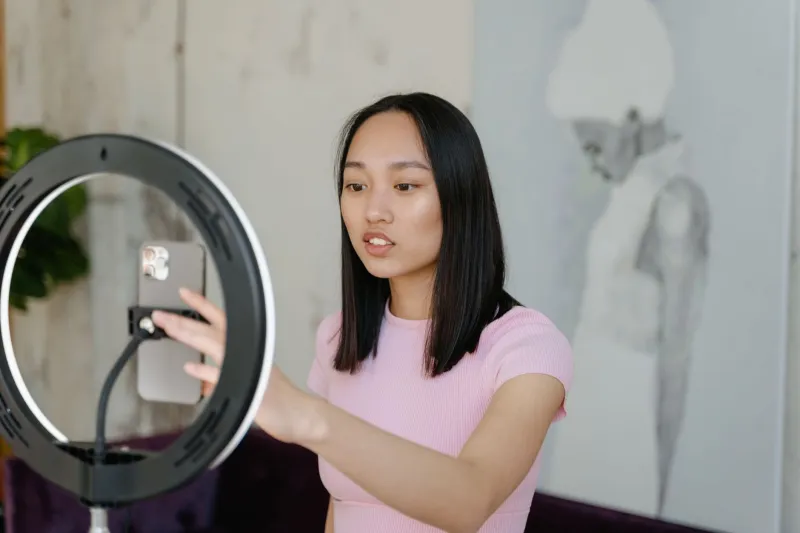
Picture an actor. Not a specific one — just the general concept of a person who has spent decades developing a craft, building a filmography, and cultivating a public persona that is at least nominally their own. Now picture that actor standing in what appears to be their living room, pointing at text that pops up on screen while a sound clip from a Gen Z meme plays underneath. They are doing the pointing dance. They are doing it earnestly. Their manager approved this.
This is where we are. This is the destination we arrived at after years of social media evolution, platform proliferation, and the relentless pressure on famous people to be relatable. TikTok took the concept of celebrity personality and ran it through an industrial blender, and what came out the other side is a gray paste of trending audio clips, identical camera angles, and the same three facial expressions deployed by everyone from A-list actors to professional athletes to senators who are desperately trying not to lose the youth vote.
The algorithm has eaten them. All of them. And it isn't even particularly hungry anymore.
The Trending Sound Trap
Every cultural collapse has a mechanism, and TikTok's particular mechanism for destroying individual celebrity personality is the trending sound. Here's how it works: an audio clip — usually a snippet of a song, a movie quote, or someone saying something vaguely relatable about anxiety — goes viral. The algorithm rewards videos that use it. Creators pile on. The sound reaches saturation. And then, right at the peak of saturation, a celebrity's social media team sends an email that says "we should do something with this audio."
The celebrity, who has heard the audio approximately once and doesn't fully understand the context, films themselves using it. Their version gets views because they're famous, which the algorithm interprets as quality, which pushes it to more people, which generates more views. The celebrity's team celebrates. They do it again next week with a different sound.
What nobody in this process stops to ask is: does this tell us anything interesting about this person? The answer, in virtually every case, is no. The trending sound is a template, and templates are the enemy of personality. When everyone uses the same template, everyone looks the same. When everyone looks the same, nobody is interesting. When nobody is interesting, we're all just staring at our phones watching famous people perform a very expensive version of nothing.
The Dance Problem
Let's discuss the dances, because we have to discuss the dances.
TikTok dances are, in their natural habitat, a legitimate form of creative expression. When a teenager invents a choreography in their bedroom and it spreads across the platform, that's the internet doing something genuinely interesting — democratizing culture, letting creativity move laterally instead of top-down. Great. Love it.
When a 47-year-old actor whose most recent role involved a three-hour makeup session to play a historical figure does that same dance in their kitchen, something has gone wrong. Not because older people can't dance. Not because actors can't be goofy. But because the entire exercise is so transparently strategic — so clearly the output of a "how do we make them seem fun and current" meeting — that it retroactively drains dignity from everything that came before it.
You watch an Oscar winner do the Renegade and you think: was any of it real? Which is an insane thought to have, but TikTok has a gift for generating insane thoughts.
The Relatability Industrial Complex
Underneath all of this is a concept that has done more damage to celebrity culture than almost anything else: relatability. Somewhere in the mid-2010s, publicists and brand managers collectively decided that the most valuable thing a famous person could be was relatable — approachable, human, imperfect in the specific ways that focus groups found endearing.
TikTok is the logical endpoint of this philosophy. The platform's aesthetic is deliberately unpolished. Bad lighting is fine. Shaky cameras are fine. Talking directly into the lens like you're in a confessional booth is not only fine, it's preferred. The platform signals authenticity through roughness, and celebrities — coached by teams of people — have become very good at performing roughness.
The result is a deeply strange paradox: the most calculated, managed, focus-grouped version of a person presenting themselves as the most unfiltered, spontaneous, real version of a person. And because everyone is doing this simultaneously, the "authentic" TikTok celebrity and the "authentic" TikTok influencer and the "authentic" TikTok teenager all end up looking and sounding like variations of the same constructed character.
Relatability has eaten itself. We have achieved a monoculture of performed authenticity, and it is genuinely haunting.
The Green Screen Confessional and Other Crimes
Beyond the dances and the trending sounds, there are the formats. Oh, the formats. TikTok's creative ecosystem has produced a set of templates so rigid and so widely adopted that they function less like creative frameworks and more like mandatory uniforms.
There's the green screen reaction video, where a celebrity responds to a news article or a tweet with a series of increasingly exaggerated facial expressions. There's the "things I didn't know until recently" list, deployed by people whose PR teams have decided that admitting small ignorances makes them seem humble. There's the "come with me" video, which is either a get-ready-with-me or a walk-with-me or a cook-with-me, all of which communicate: I am a person who does normal activities, just like you, except I'm doing them in a significantly nicer house.
Each of these formats, when adopted by a celebrity, strips them of whatever made them worth paying attention to in the first place. An actor who became famous for their intensity and unpredictability doing a "things that live rent-free in my head" video is not showing you their personality. They're showing you their social media strategy wearing their personality's clothes.
What We Actually Lost
The thing about celebrity mystique — even the manufactured, PR-managed version of it — is that it served a purpose. Distance creates projection. When you don't know everything about someone, you fill in the gaps with your imagination, and your imagination is often more interesting than the reality. The mystique wasn't always authentic, but it was useful. It gave famous people the room to be larger than life.
TikTok collapsed that distance entirely. Now you know what a movie star's kitchen looks like. You know what sounds they find funny. You know their dog's name and their skincare routine and their opinion on the trending audio from last Thursday. You know all of this, and knowing it has made them smaller, not bigger.
The pointing dance is not intimacy. The lip-sync is not personality. And the celebrity TikTok account is not a window into who someone actually is — it's a very well-funded attempt to make you think it is.
The algorithm is full. We've all been digested.
Tap the heart anyway.