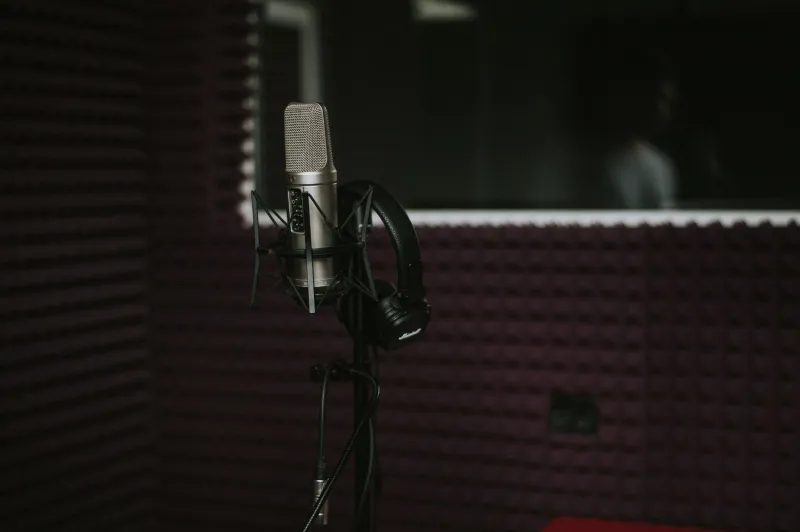
Three Episodes and a Funeral: The Celebrity Podcast Graveyard Nobody Will Admit Exists

Let's set the scene. A major celebrity — let's call them Famous Person A — has just wrapped a press tour, a brand deal, and what their therapist lovingly describes as "a period of reflection." Their manager, their agent, and some guy named Derek who just got promoted are sitting in a conference room. Someone says the word "authentic." Someone else says "long-form conversation." A third person, clearly the villain of this story, says "podcasting space."
And just like that, the world gets another celebrity podcast nobody asked for, won't listen to, and will never hear the celebrity acknowledge again.
The Launch: Delusional Confidence, Professional Microphone, Zero Plan
Here's the thing about celebrity vanity podcasts — they always launch with the same breathless energy. There's a press release. There's an announcement post with a photo of the celebrity wearing enormous headphones and looking thoughtfully into the middle distance. There's a streaming deal with a platform that apparently has a budget and absolutely no editorial standards. There's a quote in Variety about wanting to "have real conversations" and "go deeper" than the traditional interview format allows.
What there is not, conspicuously, is any evidence that the celebrity has ever actually listened to a podcast.
Because people who listen to podcasts understand that chemistry matters. Timing matters. The ability to ask a follow-up question instead of just waiting for your turn to talk about yourself — that matters enormously. The celebrity podcast, as a genre, treats these requirements as optional, like the nutrition label on a gas station hot dog. Technically required. Universally ignored.
The audio quality alone tells you everything. Episode one arrives sounding like it was recorded inside a moderately upscale linen closet. There's a faint hum that nobody fixed in post because nobody in the room knew what "post" meant in this context. The celebrity laughs at something their guest says and the laugh peaks so hard it briefly sounds like a dial-up modem trying to connect to 1997.
The Guest List: A Portrait of Favors Owed
Now let's talk about the guests, because the guest list is where the whole enterprise really reveals its soul.
Episode one is always — always — another celebrity of roughly equivalent fame who owes them something. Maybe they were in the same movie. Maybe they share a publicist. Maybe they once sat next to each other at a benefit dinner and exchanged numbers with absolutely zero intention of ever using them, until Derek from the podcast meeting suggested "what about reaching out to [Name]" and suddenly a friendship was retroactively invented.
The conversation itself follows a predictable liturgy. They talk about how long they've known each other (longer than they actually have). They reference an inside joke that isn't funny to anyone outside the room, or inside it. They say "I've never talked about this publicly" before saying something they've said in at least four previous interviews. Nobody pushes back on anything. Nobody asks a hard question. The episode ends with both parties saying they should "do this more often" with the same energy people use when they say "we should get dinner" to someone they will never have dinner with.
Episode two is a slightly less famous person. Episode three is someone the celebrity met at a wellness retreat and describes as "one of the most interesting humans I've ever encountered," which is doing extraordinary work as a sentence.
There is no episode four.
The Silence: Louder Than Any Episode Ever Was
This is the part that genuinely fascinates me, from a purely anthropological standpoint. The celebrity podcast doesn't get cancelled. It doesn't get a formal ending. It doesn't get a goodbye episode where the host reflects on the journey. It simply... stops. The feed goes quiet. The Spotify page stays up, a little monument to ambition and terrible planning, accumulating zero new downloads per week with the quiet dignity of a participation trophy nobody claimed.
And the celebrity? The celebrity never mentions it again. Not in interviews. Not on social media. Not in the memoir that comes out eighteen months later where they discuss "creative risks" at length. The podcast existed in a kind of quantum state — real enough to generate a press cycle, unreal enough to vanish without anyone being held responsible.
Their team, to be fair, has gotten very good at this. The same machine that announced the podcast with breathless enthusiasm simply redirects that energy toward whatever the next venture is. A skincare line. A production company. A return to acting described as "a new chapter." Derek, presumably, is already in another conference room.
Why Does This Keep Happening?
The honest answer is that nobody in a celebrity's orbit is incentivized to say "this is a bad idea."
The streaming platform gets a headline and a press cycle. The manager gets a percentage of whatever deal gets signed. The publicist gets coverage. Derek gets to keep his job. The only people who lose are the listeners who clicked play expecting something and got forty-seven minutes of two wealthy people discussing gratitude without any apparent awareness of the irony.
There's also a fundamental misunderstanding of what makes podcasting work. The format rewards people who are genuinely curious about other people, who find conversation itself interesting rather than just a vehicle for self-expression. Celebrities, by the nature of their professional lives, have been trained in the opposite direction. Every interview they've ever done has been about them. Every press junket, every late-night appearance, every profile — the subject has always been them. Asking them to suddenly pivot to genuine curiosity about others is like asking someone who's only ever played solitaire to run a poker table.
They don't know what they don't know. And nobody in the room is going to be the one to explain it.
The Real Legacy
If there's a silver lining to the celebrity podcast industrial complex — and I'm stretching here, I really am — it's that the failed ones have quietly made the good ones better by contrast. Every time a famous person records three episodes of breathless nothingness and disappears, it throws into sharper relief the hosts who actually do this well. Who prep. Who push back. Who treat the microphone like a responsibility rather than an accessory.
But mostly the legacy is just a lot of dead RSS feeds and a podcast category on someone's streaming platform that hasn't been updated since the year a very famous person decided they had things to say.
They did not have things to say.
Derek should have said something.