Bottled Ego: The Celebrity Perfume Industrial Complex and the Shelf Full of Lies It Left Behind
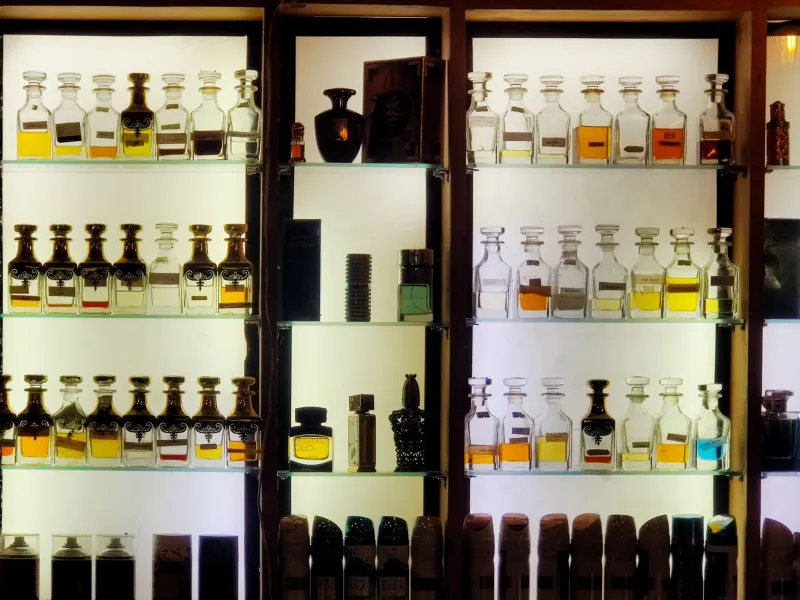
Somewhere in a CVS clearance bin, wedged between off-brand antacids and a Halloween-themed body wash that didn't sell in October, there is a bottle. It has a vaguely geometric shape. The cap is gold-ish. The label reads something like Velvet Mirage by a person whose name you recognize but whose last film you absolutely cannot name. It costs $8.99. It once cost $65. This is the natural endpoint of the celebrity fragrance industrial complex, and it is beautiful in the way that a car fire is beautiful — you can't look away, and you're a little glad it's not yours.
Let's talk about the perfume racket. Not the legitimate end of it — the Chanels, the Diors, the houses that have been blending bergamot since before your grandparents were alive. No. Let's talk about the other end. The celebrity end. The part of the industry that exists because someone's manager once said, "You know what, Vanessa, I think you could really move units with a signature scent," and Vanessa nodded, and now there are 40,000 bottles of Essence of Vanessa sitting in a New Jersey warehouse waiting to become a tax event.
How This Madness Started (Blame Elizabeth Taylor)
The celebrity perfume wasn't always the cultural punchline it is today. Elizabeth Taylor launched White Diamonds in 1991, and the thing became a phenomenon. It's still selling. Your aunt has a bottle. Your aunt's friend has a backup bottle. It's on the dresser at every Holiday Inn in America and somehow that feels correct. White Diamonds worked because Taylor was legitimately iconic, the bottle looked expensive, and the fragrance itself didn't smell like a craft store.
That success, unfortunately, sent the wrong message to approximately every publicist in Hollywood. The message received was not "this works when the celebrity has genuine cultural gravitas and the product is quality." The message received was "celebrities plus perfume equals money, full stop, no asterisks." And from that misreading sprung an industry so bloated, so relentlessly optimistic, and so thoroughly delusional that it eventually produced a fragrance called Unbreakable by Khloe and Lamar Odom, launched in 2011, which in retrospect is the most accidentally prophetic product name in the history of retail.
The Formula, Explained (It's Depressingly Simple)
Here is how a celebrity fragrance gets made, approximately:
- A celebrity's team identifies a revenue gap.
- A licensing deal gets struck with a mid-tier fragrance house.
- The celebrity visits a lab, sniffs four things, points at one, and says "this one feels very me."
- A bottle gets designed. It will be either (a) shaped like something vaguely related to the celebrity's brand, or (b) a generic teardrop because the budget ran out.
- A photoshoot happens. The celebrity wears very little and looks into the camera like they're thinking about something profound. They are thinking about their parking situation.
- The fragrance launches at a department store event with a DJ and shrimp cocktail.
- The fragrance sits on shelves for eighteen months.
- The fragrance moves to the clearance section.
- The fragrance achieves its final form: a gift basket filler.
This process has repeated itself so many times that the industry essentially runs on autopilot now. The celebrities involved often seem genuinely surprised that a perfume bearing their name exists. Which, honestly, tracks.
Hall of Shame: The Most Audacious Launches in Bottled Delusion History
Paris Hilton — The Pioneer of Shamelessness Say what you want about Paris Hilton, but she understood the assignment before the assignment was even handed out. She has released somewhere in the neighborhood of 30 fragrances. Thirty. That is not a typo. At some point, Paris Hilton stopped being a person and became a fragrance delivery mechanism wearing sunglasses. The first one, simply called Paris Hilton, launched in 2004 and actually sold well. Every subsequent one is a monument to the concept of "if it worked once, do it forever until the concept itself dissolves."
Justin Bieber — Someday (2011) The Bieber fragrance era is a fascinating artifact of early-2010s hysteria. Someday was marketed to teenage girls who wanted to smell like the idea of being near Justin Bieber. It sold $3 million worth in its first three weeks. This is not a joke. This is just what happened. The economy of parasocial longing is real and it smells like synthetic jasmine.
Pitbull — International (2015) Pitbull — Mr. 305, Mr. Worldwide, the man who appeared in every song from 2011 to 2014 whether you wanted him there or not — released a fragrance called International. The bottle looked like it was designed for a hotel minibar. The concept was, apparently, that Pitbull goes to many countries and smells good while doing so. Dale.
Tim McGraw — McGraw (2008) Country music has given us many things: heartbreak anthems, truck commercials, a complicated relationship with America's self-image. It also gave us Tim McGraw's cologne, which is perhaps the most sincerely earnest entry in this entire catalog. McGraw seems like he genuinely thought, "Cowboys want to smell good too, and I can help." Respect for the conviction. Mild bewilderment at the execution.
Britney Spears — The Exception That Proves the Rule Here is where we must pause and offer genuine, unironic acknowledgment: Britney Spears's fragrance line has generated over $1.5 billion in sales. Fantasy, launched in 2005, remains one of the best-selling celebrity fragrances in history. It smells like cupcakes and nostalgia and something you'd describe as "fun" without being able to explain why. Britney cracked the code in a way that nobody else has managed to replicate, which makes everyone else's attempts feel even more tragic by comparison.
Why It Never Stops
Here's the thing about celebrity fragrances: they almost never make the celebrity rich. The licensing deals are typically structured so that the famous person gets a royalty percentage that sounds impressive until you do the math on actual units moved. The real beneficiary is the fragrance house, which gets to slap a recognizable name on a product and let the marketing department of fame do the heavy lifting.
And yet the parade continues, because the alternative — not having a fragrance — apparently feels like leaving money on the table. Every C-lister with a publicist and a dream eventually ends up behind a bottle of something called Midnight Hustle or Ember or Reign or Just Me (which is a real fragrance by Paris Hilton, her 11th, because of course it is).
The celebrity fragrance is, at its core, a physical manifestation of ego economics. It says: I am famous enough that someone might want to smell like me, or at least like the idea of me, or at least like a professional perfumer's guess at what the idea of me might smell like if you translated it into synthetic musk and bottom-shelf vanilla.
It's audacious. It's delusional. It's capitalism doing its most chaotic work.
And somewhere in a CVS clearance bin, it's $8.99, and honestly? At that price, you might as well.
Turd Ferguson Blog: Because Someone Had to Say It — and someone also had to smell it first.